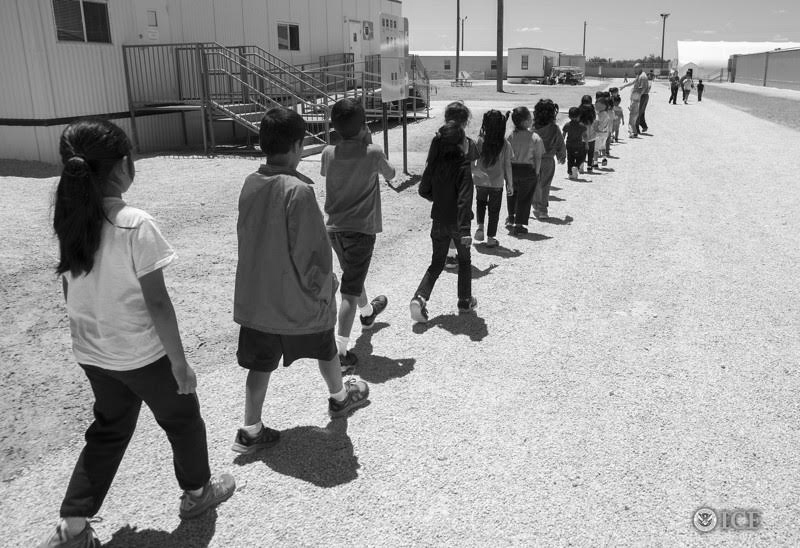
BY AMERICAN IMMIGRATION COUNCIL, 28. MARCH 2017: In the United States today, more than eight million citizens live with at least one family member, often a parent, who is undocumented. Children make up the majority of these U.S. citizens; almost six million citizen children under the age of 18 live with a parent or family member who is undocumented. Consequently, immigration enforcement actions—and the ongoing threats associated with them—have significant physical, emotional, developmental, and economic repercussions not only for the deported individuals, but for the many children who stay behind. Deportations of parents and family members have serious consequences that affect children and extend to communities and the country as a whole.
This fact sheet provides an overview of the U.S. citizen children who could be impacted by immigration enforcement actions, the challenges and risk factors that these children face, and the existing mechanisms designed to protect children if a parent is detained or deported.
Millions of U.S. citizen children have undocumented parents and family members.
Immigration enforcement—and the threat of such actions—can negatively impact a child’s long-term health and development.
- A child’s risk of having mental health problems like depression, anxiety, and severe psychological distress increases following the detention and/or deportation of a parent. Since late 2016, doctors and service providers have reported anecdotally that they have seen more children exhibiting stress- and anxiety-related behavioral changes, including symptoms of “toxic-stress,” due to fear that a family member will be deported.
- A study of Latino citizen children from 2013-2015 found that post-traumatic stress disorder (PTSD) symptoms were significantly higher for children who had at least one detained or deported parent.
- A 2010 study of immigration-related parental arrests (at home or worksites) found that the majority of children experienced at least four adverse behavioral changes in the six months following a raid or arrest. Compared to the previous six months, children cried or were afraid more often; changed their eating or sleeping habits; and/or were more anxious, withdrawn, clingy, angry, or aggressive.
- Even before birth, immigration enforcement can put a child’s health at risk. The 2008 worksite raid in Postville, Iowa—the largest single-site immigration raid in U.S. history—was tied to premature and underweight births, complications that put babies at risk for infant death or long-term health problems. Researchers found that babies born to Latina mothers in Iowa within 37 weeks of the raid were 24 percent more likely to be underweight compared to the previous year. This increased risk was not evident in babies born to non-Latina white mothers in Iowa.
The detention or deportation of a parent puts children at risk of economic instability.
The deportation, and even the arrest or detention, of a parent or other household family member has significant short- and long-term financial implications. U.S. citizen children and any remaining family members can face substantial economic disadvantages following the removal of a primary provider.
- An analysis of 2014 median family income estimated that a family’s income would decrease 50 percent following the deportation of a family member.
- A study of immigration enforcement in six U.S. locations between 2006 and 2009 found that families lost 40 to 90 percent of their income, or an average of 70 percent, within six months of a parent’s immigration-related arrest, detention, or deportation.
- The ability to afford housing may become more tenuous following the deportation of a provider, resulting in the loss of a family’s home and more frequent relocations.
- A 2016 study of immigration enforcement and housing foreclosures found that “deportations exacerbate rates of foreclosure among Latinos by removing income earners from owner-occupied households.” Furthermore, the research revealed that counties with 287(g) agreements, which authorize immigration enforcement collaboration between local police and ICE, had substantially higher foreclosure rates among Latinos.
U.S. citizen children may end up in the child welfare system following the detention or deportation of their parent.
Parents—regardless of immigration status, detention, or deportation—have a constitutional right to custody of their children (unless deemed unfit). While both the immigration and child welfare systems generally recognize that it is in a child’s best interest to remain with a parent or family member, the complexity and lack of coordination between agencies can lead to prolonged family separation and even termination of parental rights.
- If a parent is unable to arrange childcare or custody prior to detention or deportation, the child may be taken by the state’s Child Protective Services (CPS) for placement and case management. The child is usually placed in an emergency shelter; group home; or with a relative, friend, or stranger in a foster home while custody is determined in family court.
- An estimated 5,000 U.S. citizen children in foster care had a detained or deported parent in 2011, according to a national study.
- Children in foster care in counties with 287(g) agreements were 29 percent more likely to have detained or deported parents compared to non-287(g) counties studied in 2011.
There are limited mechanisms to safeguard parental rights, which are incredibly difficult for parents to regain following detention or deportation.
All parents have the right to receive a notification of custody proceedings affecting their children, attend such proceedings, and receive copies of related court documents. Yet there are few enforceable, permanent policies in place to protect these rights.
- Federal law mandates that parental rights be terminated if a child has been out of a parent’s custody for 15 of the past 22 months. Policies and procedures vary by state, but in order to maintain or regain parental rights, CPS generally implements a reunification plan that requires a parent to have regular contact with the child and participate in family court hearings. Detained or deported parents have historically faced significant barriers to these requirements.
- Parents may request release from detention in order to care for their children while they are in immigration proceedings; however, ICE does not guarantee that it will exercise discretion in such cases.
- In 2013, ICE issued its Parental Interests Directive to prevent and mitigate the impact of immigration enforcement on parental rights. Broadly, the guidance aims to better facilitate parent-child visitation; parental participation in custody proceedings; and ensure the role of a parent is recognized in case reviews and initial detention, transfer, or prosecutorial discretion decisions.
- In 2015, the Children’s Bureau within the Department of Health and Human Services (HHS) issued an information memo encouraging child welfare agencies and case workers to review ICE’s directive and work with ICE to ensure family services “focus on safety, permanency and well-being” regardless of immigration status.
Despite these directives, significant issues persist. Since ICE is not required to inform CPS of a parent’s whereabouts, CPS may still have difficulty locating and properly notifying a detained parent; family courts and caseworkers may not understand why a parent is detained and unable to participate in proceedings; and ICE officials may underestimate the impact that enforcement has on U.S. citizen children who are likely to be left behind.
Parents with a final deportation order must make the difficult decision of whether or not to bring their children—including U.S. citizen children—with them.
ICE issued more than 200,000 deportations for parents with citizen children between 2010 and 2012, according to the most recent government data available. While the government does not track whether U.S. citizen children stay in the United States or leave with a deported parent, both scenarios occur and pose challenges.
- If parental rights remain intact, parents facing a pending deportation may make custody arrangements for their children to stay in the United States. Under the Parental Interests Directive, ICE is supposed to ensure “appropriate efforts, where practicable,” are taken to allow a detained parent to make guardianship or travel arrangements for the child prior to deportation.
- If a child’s custody is still being determined after a parent has been deported, the ability of the parent to regain custody or participate in proceedings—even if the court requires the parent’s attendance—is extremely limited. ICE, for example, may consider facilitating the travel of a deported parent back to the United States only if the proceedings are to terminate parental rights.
- Deported parents have the right to reunite with their children outside of the United States as long as the reunification plan is ongoing, but this requires significant coordination between family members, the parent country’s consulate, and U.S. state and federal agencies. It can be difficult for deported parents to prove that they can provide for their children in a stable and safe environment in the country of deportation, based on many of the same conditions that may have triggered the parent’s migration to the United States in the first place.
Download the Fact Sheet here.